Monday, 21 March 2011

Heroes - they pay for us


When the Tchernobyl nuclear power plant exploded in 1986, the Soviet government sent thousands of army draftees and miners to dig tunnels or clean away debris before erecting the steel coffin to contain the radiation.

These people did not realize fully what they were asked to do: to face certain death within weeks or months or long, painfull illnesses. They suffered for the common good and I can only hope they are honoured by their people for this.

But what unfolds right now in Fukoshima is of an entirely different kind. The Japanese people know what radiation means and most certainly those who fight the monster right on spot. These days I frequently have a look at NHK World, the Japanese news channel in English and saw there those Tokyo Firefighters shaking hands before trying to spray water on those melting nuke rods. Normally, the Japanese are a kind of poker face nation but here I saw they were fighting back tears.


To do this you have to be nearby and nearby means death, a very unpleasant slow death. They were volonteers I have been told and if the word Hero has any meaning they are.
They face death out of their own choice so that others may go on living! Heroes.

As to nuclear power plants, they should have been scrapped since long. This technology is just too dangerous for dumb human species. I have been working in industry all my life and we had the saying "something that can go wrong, will go wrong, one day".

This "Sword of Damocles" hangs above our heads and this for thousands of years because nobody knows for certain what to do with the nuclear waste. Even without Tsunami, earth quakes or terrorist attacks we are all facing this threat due to our collective stupidity. And this technology is not even cheap, one of these lies we are being told from time to time. There was a Tchernobyl type power plant in Eastern Germany, shut down about a months after reunification. Now, more than 20 years later, the plant is still not totally dismantled at a cost of about 1500 Million Euro or nearly 2 Billion US Dollar! Just dismantling.

As to the waste, nobody know what to do with it. There is not a single place on Mother Earth where the geologists can say "this hole deep down is safe for the next five thousand/ten thousand years". But the search for a waste dumb goes on, worldwide, to the tune of Billions of Euros or Dollars, Billions, really, no exageration. So, for the time being, the stuff remains somewhere behind each power plant, safely stored away in big costly steel drums. But in forty, fifty years, those containers have to be replaced. Everywhere, all over the world! And so on, and so on and so on. No need for a Tsunami or a king size quake to shiver a bit. No need to panic either, those are old facts, nothing new, no surprise here.

Last not least: don't swallow anti-radiation iode pills. They are useless unless your home adress is Fukoshima or Tchernobyl. Better sit under a table with a pillow over the head.

Saturday, 5 February 2011

Pieces of Music I love most


The last post here gave the list of my ten most loved books. Now I am doing the same but this time with music. My top ten are right here but it is understood that number 1 is not the biggest love, it only means I have to start somewhere and I do it at 1.

Marie-Paule Belle - La Parisienne

This is a song of a young girls who starts living in Paris and what sie does to get popular. Very dahing, daring, osé, bold and melodious. Here is the text in French

Exultate Jubilate - Wolfgang Amadeus Mozart - Lucia Popp
This music is like Champaign, it bubbles with the joy of life. Nothing to do with the customary dour church music. And Lucia Popp is my preferred singer anyway.

Wo die Nordseewellen - Lale Andersen
This is a song dedicated to the North Sea and the people living at its shore. Lale Anderson has a very strange voice. She sings in the Northern German dialect (Plattdütsch).

Hat man nicht auch Gold beineben - Fidelio - Ludwig van Beethoven - Matti Salminen
This endearing song is all and exclusively about money. You need to have it. The singer is a powerful basso; he starts "if you don't have it you can't be happy". Here are the lyrics in German and in English

Der Freischütz - Carl Maria von Weber - Hunters' chorus/Jägerchor
That's one of the very few operas I feel strong enough to listen from beginning to end. This "Hunters' Chorus" is great fun to look at: the choir director killing off his singers one by one.

The Dubliners - Dublin in the Green
I love them. Such powerful music. As far as I know I have more or less everything they published. So it is not specially this song, it's the group! They are unique. The singing black beard is grey now but the rasping voice is the same.

Carl Orff - Carmina Burana/In Taberna quando sumus/Drinking chorus
This drinking song has a latin text. I especially like the part where they sing the long list of who is boozing along: everybody. This list starts at about 1:40.

Paul McCarthney - Mull of Kintyre
This guy was one of the Beetles. The song is melodious and the lyrics are wonderfully nostalgic.You can click on two versions, the first sung by PMC, both are great.

Joseph Haydn - Cello concerto in D major - Mischa Maisky
Another piece of melodious music! I love this concerto so much I bought 3 versions and even to me - I am not a learned music lover - there is a clear difference.

Bairisch-diatonischer Jodelwahnsinn - Münchner Gestanzln/Monika Drasch
Thi is modern Bavarian folk. Jazzy folk I would say. Monika Drasch (click on her name) belonged to this group. She is the good lokoking girl with the red hair and the green violin. In the second recording, she talks first in Bavarian German and then sings about a love sick ox driver (kind of cowboy in US English). The lyrics are from a Bavarian girl who immigrated around 1900 to the USA and died in Chicago, totally unknown and penniless.

Mikis Theodorakis/Pablo Neruda - Canto General
This is a genious of a composer. And he shows that there is more to present day Greece than brainless spending of money you don't own. Powerful melodious music. Here, too, I have two different videos of different parts of the Canto. Maria Farantouri belongs to the original performers, her voice is unforgettable. The second recording replaces her by a beautiful blonde from Finland.

Paco Ibanez - Erase una vez........ El lobito bueno
A very endearing voice and a great composer. Met him first when I tried to learn Spanish. All that remains now are his records. This is the story of friendly wolves and nice witches. This is an old recording. He is still active and singing but his voice now is not what it was (too many bottles I was told).

Hubert von Goisern - Kuamelcher
That is a kind of contemporary yodel music performed by an Austrian singer and composer. He has been some time in Tibet and in Northern India and I think he created a kind of Zen-yodeling, I am not kidding.

Sick note (kind of singsong)
For those who wish to have some fun and nothing more. This is for you!
And anyway, who is reading and hearing this from one to ten? I wonder. The Sick Note is performed by The Dubliners but it is not really a song. It is about someone who had a ton of bricks falling on him, he explains how it happened and why he could not come to work.

One last word. Those recordings come from different countries but looking at my list, all the music I really love is from here, from this small place called Europe. I did not do this on purpose, it is like that though I know that every country, every continent has music, loved by its people. So I know, like and appreciate for instance Ragas from India, Chinese flute music and those choirs from South Africa. There is some music from Morocco I like and some songs from Ms Kalsoom, the Egyptian singer but it does not go to the heart. That is sad to say but so it is.

There is however one exception to what I said here: music made in USA. Non is included but I did not do this on purpose because there are some I love very much, oh yes. Like "John Brown's Body", "Clementine, oh my darling Clementine", "Father Death Blues" sung by Allen Ginsberg, one of my all-time favourites, "Duelling Banjos" out of the movie Deliverance, or "Sisters of Mercy" by Leonard Cohen or Nina Simone singing "Ain't got no.." Another singer, long dead, too, is Paul Robeson, this amazing basso voice. "Joe Hill" is the song I love most. Most of these people are dead, dead for many years. In my heart they are classical, classics, not forgotten by me and as I can find these people on YouTube I suppose I am not the only one.

Friday, 28 January 2011

The pleasure of reading

There are people who never read. By never reading I mean never reading a book for pleasure. It simply does not occur to them. They might read a daily newspaper, the television weekly but a book? Never.

As far as I could find out through observation of others, never reading a book implies a certain lack of curiosity. Reading a book - nearly any one - makes you enter the life of someone else. I have always thought that reading can b e a kind of fast lane to the experiences of others and that might come handy one day.

As to me, well I have been reading nearly all my life. By nearly I mean since I learned reading, about one year before entering school. When I was about five years old my grandma read those Till Eulenspiegel stories to me. This guy who lived in the Middle Ages was a kind of impudent trickster and I could not hear enough. Thus when my grandma stopped I was so impatient to know what will happen next that I managed to learn it without any outside help.

Here, have a look at this photo. This is Till Eulenspiegel's stature in his birth town. I owe him something.


Not long ago I read in Smorgy's blog a very exhausting list of his readings. And in the comments he gives even the ten books he likes most. So I just imitate him and give a list of my favourite ten. Here is it, I tried to do my best. Number 1 does not mean this is my absolute best, I only start at one.

1. Peter Weiss - Fluchtpunkt
2. Arno Schmidt - Kaff auch Mare Crisium
3. Bertold Brecht - his collected poems
4. Johann Wolfgang von Goethe - his collected poems
5. J.D. Salinger - The Catcher in The Rye
6. W.H. Davies - The Autobiography of a Super-Tramp
7. Raymond Queneau - Le Dimanche de la Vie
8. Michael Crichton - Timeline
9. P.G. Wodehouse - Psmith/Jeeves stories
10. Egon Fridell - Kulturgeschichte der Neuzeit
11. Mika Waltari - Sinuhe the Egyptian
12. Ernst Vollbehr - Bunte leuchtende Welt

Well, those ten became twelf. I am unable to delete two books from that list.

Some are well known but others , like No 1, 2 and 10 are somehow lost, forgotten but to a very small number of readers. Some more years to go and nobody will remember.

And something should be mentioned, too. It is very difficult to find a factual description of a book. I mean a review that tells you what is going on inside. Instead of this the reviewer talks and talks but I am not wiser at the end. One of the rare exceptions to this is the blogger I Me My . But maybe this is so because this person is not a professional book reviewer.

Works of art are subject to aging like people. The fastest to age are movies. But books age, too. There are those famous writers of the 19th century, monuments of literature, but I can't help it they seem lengthy and boring to me. Most of them. Long descriptions of situations and surroundings, I am not so very much interested in. So it could well be that each century or each time has its own literature or let's say interesting and thrilling books.

Friday, 14 January 2011

Busy with other people's affairs

Imagined conversation: "..........and when you talk to the Chinese Prime Minister, don't forget to mention the Human Rights situation in his country".

To tell the truth, I hate this. Why not talk about the human rights situation right at home? There is certainly a lot to do!

These two YT's are not really unforgettable or outstanding; they just illustrate a bit this subject.


These days, it's those "presidential" elections in Ivory Coast (somewhere in Africa). Having finished these elections they landed with two presidents ready to cash in, one who did win but could not get in and one who got in but did not win. Now, in dozens of countries worldwide, they are being told what to do. "Be democratic", everybody is clamoring, respect this, respect that. Armies are made ready for a peaceful intervention, the UN votes something, etc, etc, etc. Why not leaving these countries alone and why not refrain from fostering on them our democratic procedures ?

Dear reader, if you managed to read down to this line, this is something you might appreciate:

Democracy is a device that insures we shall be governed no better than we deserve (Bernard Shaw)

And here another one from Winston Churchill:
The best argument against democracy is a five minute conversation with the average voter .

The spirit of democracy is not a mechanical thing to be adjusted by abolition of forms. It requires a change of heart.
Mahatma Gandhi

I like especially the last one. So true.

Democracy is one of the few products that are absolutely homegrown, cannot be exported and should not be imported. Otherwise, we'll see those lousy copies like in Afghanistan, Irak, Kossovo and elsewhere.

However, we should try to improve our own democratic procedures. That would be a big job and would keep us busy for dozens of years. Especially our politicians - many of them - need some tuition and some improvements, not to speak of our institutions. Useless to go into details, every country has its own shortcomings.............

When a country is subject to a catastrophic event, like an earth quake, tsunami or heavy floodings we should help and everybody is honoured by doing so. Nevertheless, there are questions that come to my mind.

Take the case of Haiti: last years' quake killed about 250.000 people and flattened their capital Port-au-Prince. Now about one year has passed and I hear they have managed to clean about 5 (five) percent of the rubble. On television I see some of our gallant helpers from Europe or North America (the ever expanding NGO's) working with a shovel to help shifting the rubble from A to B.
Why can't the Haitians clear the rubble away themselves?
Yesterday I saw on the telly Haitian women complain of rape gangs operating inside those tent cities. And the Haitian police force? And the other people, living near-by?
Some months ago they had a cholera epidemy starting and Haitians got busy accusing rescue workers sent by the United Nations to be responsible by means of witchcraft. Some UN soldiers even got killed.

A few months ago, we graced the Haitians with one more election, financed by other countries through the United Nations. They elected a musician as president but it seems not everybody there is ready to dance according to his tune. So they are fighting in the rubble streets, do a little killing among themselves because not everybody is happy with the counting of the votes. Some ballots disappeared, others were counted twice.

Considering all this, my idea is that help - meaning our money - should go where the concerned nations are ready to work themselves towards the same goal and show it! That's not a new idea, the dicton "help yourself and God will help you" was not coined yesterday.

So let's stop giving lessons to other nations and to far away peoples. They don't like it as we don't appreciate to be told what to do. I remember the uproar when at the height of the second oil crisis, the OPEC boss and king of Saudi-Arabia told a reporter "if you feel cold at home because you have no heating, just put on a warmer sweater".


Thursday, 16 December 2010

The Soviet Union - The Evil Empire

Yesterday - my wife was out at the local gym session - I switched to the TV channel ARTE and saw the docu-fiction "Stalin-Molotov, the tyrant and his double".

The Soviet Union disappeared from the map in 1990 and nowadays it is nearly never mentioned anymore. But to me this state means a lot, the Soviet Union accompanied practically my entire life!


When I was born, the communist SU and Nazi Germany, The Third Reich, were mortal ennemies. Looking back on this I can't help thinking they hated each others guts so much because they had a lot of things in common.

I am born in Berlin and spent my youth there. At that time, after the Second World War, the city was divided. And this dividing line, The Wall, marked the border between the Communist East , sponsored and maintained by the Soviet Union and the Western World, as we called it at that time.

Like everybody else, everywhere, I lived my life. But the impression lingered on: we are being observed by a snake that waits patiently - and sometimes less patiently - to gobble us us, me included. Those who are older may remember those sayings "better red than dead" and the other one "better dead than red".

Years later, after my military service, I decided to take a break, have a sabbatical, and I went to India.

I had some money saved but not a big heap, so I hitchhiked and passed by cars or trucks through Yougoslavia, Greece, Turkey, Iran, Afghanistan and Pakistan. All countries I crossed - in Europe and Asia - had something in common: up north was the Soviet Union. I covered thousands of miles but up North was the big entity ready to rake me in, whenever possible.

In Afghanistan I even met Russians. At that time Afghanistan was still a kingdom but also something like a colony in waiting, ready to be gobbled up. The Russians there, in the Northern and Western part of the country were doing some development work there, kind of NGO's, probably with a hidden agenda, like all great powers.


That was the time of the Cold War and thus the US Americans were present in the Kandahar region. Looking back, thinking back, I wonder if those two ever met and talked it over............

Many, many years later, I lived in Paris and managed to pass a little holiday in Bruges/Belgium, one of the most beautiful town I have ever seen. In the street someone talked to me and said "The Berlin Wall has fallen". I could not believe it. This wall and the Soviet Union behind it seemed everlasting to me.

Now this is already twenty years in the past. The mighty Soviet Union, the nightmare of millions and millions of people, lasted only 70 years!

And what will remain of it in hundred or two hundred years: probably not much more than a footnote or some lines in history books.

Tuesday, 30 November 2010

Wikileaks and the national interests

Wikileaks: big hullabaloo about secrets of state, gone public. Thank you. We are being entertained by the US government, free of charge and at prime time. And not only this: many secondary choirs and solo singers give their best .

Sure, not everybody likes it. Some shit green or yellow. They stand there naked and exposed when - a moment before - everything looked so wonderful.

About 150 years ago, the German philosopher Friedrich Wilhelm Nitzsche said this: "State is the name of the coldest of all monsters. Coldly it tells lies and this crawls out of his mouth: I, the State, am the people".

Those in power, everywhere or nearly everywhere, tell us they are busy for the common good and acting in the national interest. That might be partly true but only partly.

When I hear the word "State" I am thinking not about a cold monster but about a huge bureaucracy that never sticks its head out but its members most certainly have interests. Permanent interests. Interests for soft life, money coming their way, influence and power and all this with as little responsibility as possible for their doings hence the need for secrecy, anonymity and hypocrisy to make it happen.

There is no such thing as an abstract body called STATE. There are only people who have chosen to hide their actions behind this word.

When we hear the "national entertainers" from here and there, let's think about this a moment before applauding those brilliant and convincing speeches.

Tuesday, 19 October 2010

The new aristocrats


On the left side: "we are fed up" and on the right side: "we are on strike"


A friend once said to me, France means three things to him: Paris, wine and strikes. Well, that's putting it into a nutshell. I have been living here now for over 25 years and I can testify there is more to it.

But there is no denying it: strikes are aplenty over here. What is less well known is the fact that it's always the same people who are on strike: the state employed teachers, the National Railway people and public transport in general. The public sector in general at all levels, state, cities, any kind of administration plus those companies that have at least strong ties with the public sector (the State being an important shareholder or so).

And when they have finished one of those stikes their speakers ask for compensation - meaning the salary paid in full - and if there is some hesitation to grant this, there is pronto another strike.

Good old Karl Marx's definition of strikers "people who have nothing to loose than their chains" is really an old hat.

These happy strikers are not the downtrodden poor, they are our aristrocrats and consequently, we have to feed them! As the aristocrats of old, they have prerogatives and special rights, like a secure job unless you kill father, mother and your boss, few hours of work, garanteed days of illness (oh yes, in some public sectors), 7 weeks of holidays per year at a minimum, pension at 55 or 58 at the latest with a monthly amount identical to the last salary.

When you talk to a civil servant, they always tell you how little they earn. But they never mention the numerous bonuses they get, for having children, for not working or living in the place where they have been engaged, three days of paid leave for one child that is ill and so on, and so on, paying less for their pensions than the private sector but getting more in the end.....

And there is another similarity with the pre-revolutionary aristocrats: they are not thankful for being fed by the taxpayer who pay their salary, their pension and their workplace.

I have been late at my job because of the railway strikes. I got sacked due to the railway strikes. The only solution for me is to die but even this I can't do because of the railway strikes!

The only exception to all this, as far as I know, is the police, they don't go on strike, they work long hours in frequently dangerous surroundings and they are grossly underpaid. The other exception is the people working in the public health sector, doctors, nurses etc. Long hours of work, unpaid overtime, stressful surroundings.

Here, the trade unions are very small compared to other countries. And their members are nearly exclusively "busy" in the public sector. Therefore, they have plenty of time to walk the streets shouting slogans and having a good time. When it rains they are less numerous. Nearly any reason is good for a strike here or there and when they are being asked you generally hear it's for the common good. Those striking teachers and public transport people see themselves as a kind of vanguard. They show us the way and do what we can't do. Thank you!

Saturday, 25 September 2010

Small universe


September, 22, last day of a glorious Summer. Walking round the house, in the Sun, I thought what a happy life. No more city dwelling for me, surrounded by concrete, noise and bad air.


This is a big garden and I have the privilege to live there. Sure, I own the place but all the other inhabitants, the plants, birds, squirrels and so on happily ignore this. They live their own life and I try to have a light footprint.

The above apple tree is a tree baby. I planted it a year ago because the original tree was uprooted by a small cyclone. Thanks to global climate change, we had our first whirlwind ever over here, two years ago. Say hello to Oklahoma/USA.


The previous owner lodged his little dog in there. Now it is empty but I keep repairing it because of the roof. Those stone shingles are typical for the region. You need huge beams to support the weight of those stones. A normal roof would simply collapse under its weight.


Meet Mister Atlantic Cedar, cedrus atlantica. He is twice as big as the house but only slighly older. At least, that's what I suppose because hundred years ago this was grassy farmland for the cows. And peasants don't plant cedar trees! Let's hope he will never fall on the house. But in this area, the big storms always come from the South-West, never from the North-East...............


That's hard to believe, but they grew right here! These lepiota (in Latin macrolepiota procera - parasol mushroom) have a wonderful taste. Just put them in the frying pan like a steak if it is open. Add some butter. After frying, add some salt and pepper and then iam, iam.


Great to look at, don't know what happened when I made the second photo but I could not resist. Home-made abstract art, painting with light. And in this time of the year, the birds feast on them. End of October, the flowers are empty shells, not a single grain left.


Still life in a shady corner behind our "doll house". A good place to sit on a day with blazing sunshine, 40°C (or 104°Fahrenheit).


Same place as before, just another angle of view. Fuchsia flower. See the wooden door in the rear. I made it.


During the warm months, a frog is living there. And the second day I installed the little pond, some water fleas settled there. Where did they come from? Where did they live before? Another mystery.

Saturday, 3 July 2010

A little excursion into paleobiology


I like science. I am interested in it. Any science, or nearly because there is science and science. You can study subjects at a university that may be worthwhile but only remotely related to science. So you can become a major in political science meaning you have got some coaching and training to con people into believing you will do something for them.

Or you can study theology so as to be mentally equipped to become a priest, a bishop, mullah, ayatollah, rabbi. Fully trained to speak convincingly about a specific eternal truth. However, you cannot study for a degree in animist religion, cargo cult (invented in Borneo), scientology, vodoo. Not yet. No, you cannot become a Science Major in Louisiana or Haitian Vodoo. That's a pity but so it is, for the time being!

No, the kind of science I am interested in are those branches where people try to find out, to understand, to improve.

Well, sorry, the stuff above is a digression. The subject right now is paleobiology, linked to evolution of animals and plants. People working in this field try to find out the evolutionary history of life.

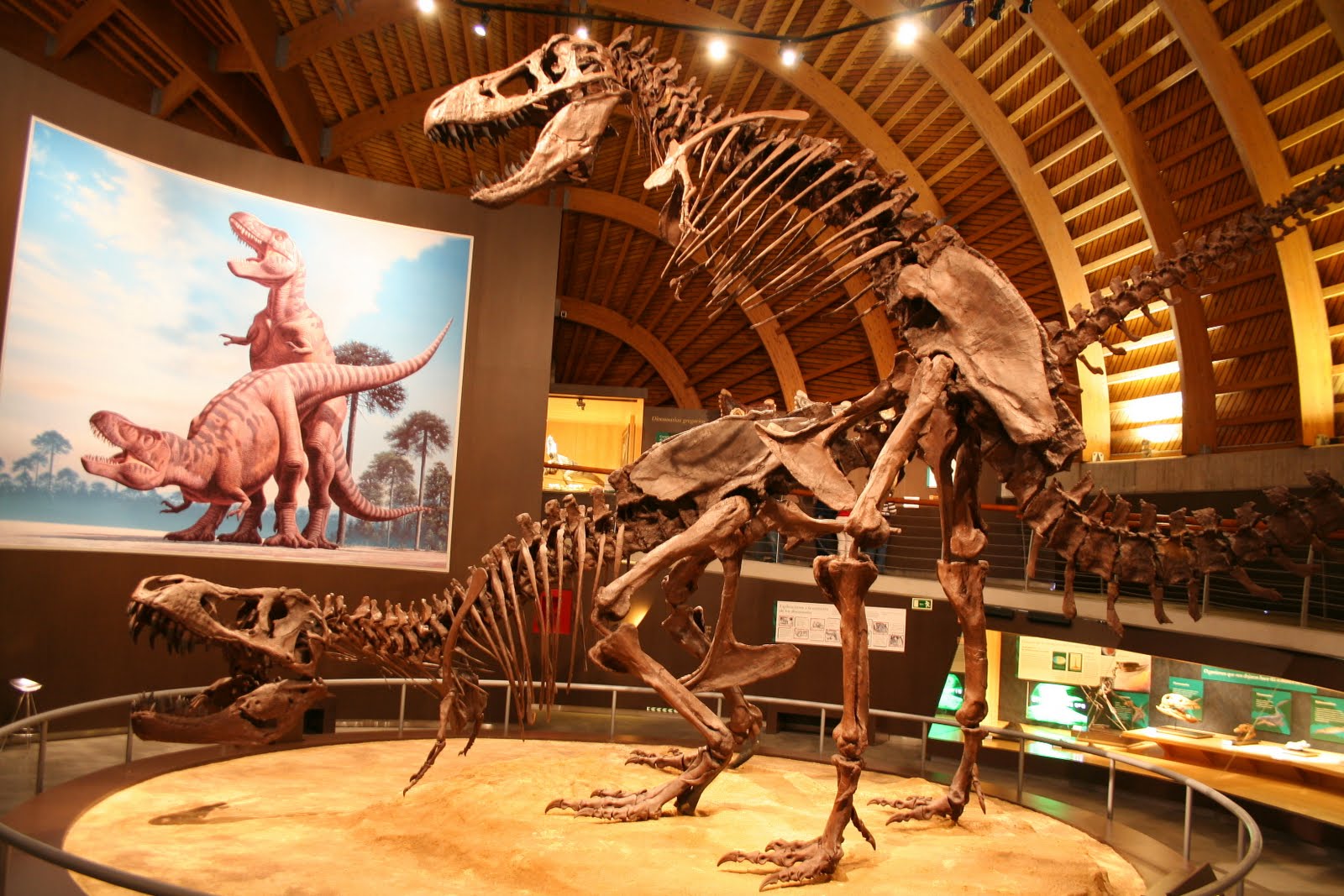
The point I am interested in is the extinction of the dinosaurs about 65 Million years ago. There was this big comet crashing somewhere on this unhappy planet and wham, all the dinos died. Those living on the land, on the ground and in the air and those living in and under the water.

In a nutshell: I don't believe it. Some must have survived. Why shouldn't they? The sharks exist for more than 400 Million years and they managed to stay with us. Same for the crocodiles that crawl around for about 200 Million years and they are still here. So why only the dinosaurs vanished totally in a very short time?

So my idea is that though most died when this killer planet made Mother Earth dive into a long Winter, some survived and carried on. I am even convinced the first humans must have met some of those last dinosaurs, the biggies, kind of Tyrannosaur, I suppose.

Why I think that? Because in all civilizations there is talk of dragons. And when you look at pictures of those dragons one frequently sees a kind of big, snake-like lizard with big claws.

Here, please look at this Chines bronze showing how these people imagined a dragon.


And this one is a German engraving showing Hercules slaying the Hydra, the ancient Greek mythological dragon.


This is the Klagenfurt Lindworm. Well, I don't think that proves anything but I show it nevertheless because this is a beautiful stature. However, if you have a look at the old coat of arms of that city, the dragon there looks very convincing.


This last sculpture shows a very impressive dragon on the Kaiserbrücke in Mains/Germany.


This is a bit out-of-the-way subject. I wonder if I have convinced anybody and some of my readers might think "I don't care". Sure, right or wrong, nothing changes either side. But the same is true for evolution vs. creation. However, the outcome of this little quarrel might have huge implications.

Wednesday, 26 May 2010

Lawyers - the scourge of our time


In the year 8 at the time of the Roman Emperor Augustus, Germanic tribes destroyed three Roman legions during a battle that lasted several days. Those tribal people must have had a red-hot hatred against lawyers, called "legal pleaders" at that time. Lucius Annaeus Florus tells the story thus: "They sewed up his mouth after first cutting out his tongue, shouting: at last, you viper, you have ceased to hiss".

Sorry to say that but I love that story. Two thousand years have passed but the quality of those millions of "legal pleaders" has not improved.


Do you believe in God? - Depends on the client

Nearly all Western parliaments are swamped with lawyers of all kind. Due to their efforts, nearly everything is complicated, they are churning out laws, orders, edicts, rulings, regulations.

Generally ambiguous, those laws have the merit to keep busy and well paid that army of legal experts, feeding on the people like leeches.


As to me, I cannot change this situation. But at least I have made a solemn private oath never to vote for anyone who has a legal profession. There are hands you cannot cut off but at least nobody can oblige you to kiss it.

I have been told that in the USA lawyers sometimes contact people after an operation just to find out if there is a possibility to sue someone for money. We are not yet there but will have the same situation within the next ten years.


Right now there is a shortage of engineers and scientists in many Western countries. On the other hand, students of law are aplenty, studying to become parasites of their own and hoping to haul it in big.

A country functioning without rule of Law and security makes life a misery for everybody with the exception of some strongmen. But this cancer-like proliferation of litigations could well be our undoing.

Behind this big screen of legal safeguards lurks the real lawlessness. Just listen to the news.