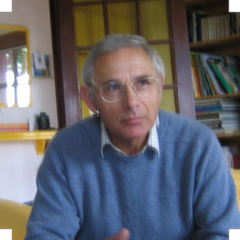
Yesterday fellow-villager Valérie told me that the amount of money spent per month for Diesel by herself and her husband has reached 850 Euro (about 1300 Dollar at present exchange rate).
Quite a lot for a family that is not hauling it in with a shovel. Then I asked her how she is driving and she explains she drives sportingly. Meaning, she accelerates than brakes, braking accelerating, braking accelerating.
Well, I don't drive like this. In fact, you might say I am driving like my own grandfather. This is not due to fear of traffic and speed. I am accelerating smoothly, I brake only when I can't help it, preferring the motor brake by shifting into low gear. When reaching a village where the max. speed is 50 km/h (about 30 miles), I leave the gas pedal and frequently go into idle speed for better gliding.
You might consider this a rather boring driving technique. But it isn't because I am doing all this with a passion. I want to become world champion of low consumption. In case the title will ever be given I am ready to compete.
Last October my wife bought a new car - VW Polo Diesel TDI 1,4/80 HP - and this car is equipped with a kind of computer giving the average consumption of the current trip.
When she comes back from work in Aurillac, 40 km (25 Miles) from here, I frequently check her average consumption. Now it happens more and more often that she uses only 3,9 liter on 100 km or goes 60 1/3 Mile per Gallon!
Splendid, really. Good for the budget. Especially now with one liter of Diesel selling at 1,28 Euro (7,51 US Dollar per Gallon). But what amazes me is how she is doing it. With all my gimmicks I cannot do better and she is just an ordinary driver, like many women. She never goes into idle speed when the road is downhill. Just a careful, reasonable driver without any fuzz and addiction to overtaking whatever appears in front of her.
I would like to know and solve the riddle.
The first photo shows my wife where she gets the keys from the Volkswagen dealer. The lower one is our last homage to my Golf. I bought this car 20 years ago and it was still in top shape, passing the Technical Control with flying colours. When I made an ad in the local paper to sell it for 6OO Euro I got more than 30 phone calls.
About ten years ago I heard for the first time an aria sung by Lucia Popp. Since then, she has been my favorite classical singer. I can't really say why because my technical knowledge of music is scant. I just love to hear her singing.
Lucia Popp's voice can go very high up but to me there is a difference with most other opera singers: even on top, she remains melodious, there is spare room and she never becomes the screechy slate pencil voice you hear so frequently.
Here, Lucia Popp is singing Laudate Dominum out of Vesperae Solemnes de Confessore from Wolfgang Amadeus Mozart. When he composed this piece of music, Mozart must have been very young, about 20 or so. If I had faith and were a believer I would say Mozart was divinely inspired when writing this piece of church music.
Last not least, I would like to say thank you to YouTube that made all this possible and to the British chappie Glenmed who posted the recording. On his personal page Glenmed explains "I try to avoid present-day teenager dum-dum stuff". God bless England and the English, may they never loose their splendid sens of humor.
May I give you here my very personal and unsolicited opinion about modern arts: exception for movies and literature, I see it as mostly cheap, fast stuff made by con men/women who should thank God not to be obliged to work in an assembly line.
Painting has deteriorated to a kind of decoration but more ugly. In former times, a painter learned his job for years and years and the great ones never stopped learning and developing. Nowadays, a painter is someone who holds a brush in his hands, has some expensive color on the table nearby and busies himself to transfer the stuff on a flat surface.
A painter nowadays is nearly exclusively a person who has scant knowledge of painting techniques and is unable to make a living from it.
Sure, there are some real painters among us. Unfortunately, these people need one or two months at best to finish their job and nobody wants to pay thousands of Dollars or Euros to an unknown artist. If they don't want to die of hunger they have to do something else to make a living.
Last not least, the art of painting has no rules, these days. Nobody knows what is a good painting and what is a bad one.
Thus, painting as an art is dead, stone dead. Later centuries will probably look aghast at our artistic performances.
For those who are not yet tired of reading, what about this story that took place in some years ago in Beaubourg, the Paris museum of modern arts. Upon arrival in the morning (probably around 10 a.m., this is not a factory), the guards discovered to their stupefaction that one of those works of art had changed substantially over night.
If I am not totally wrong this happened to a work from the German artist Joseph Buys. It shows a fully equipped room featuring an unmade bed and various other items, mostly disposed in artistic disorder.
Unfortunately for this world famous artist, the charwoman (also called surface technician over here) newly hired by the museum took herself to the job to clean the room thoroughly.
Well, I imagine the restoration squad of the museum could face the challenge.......
PS to all that: just added a third picture following Anrosh's comment. This drawing from Käte Kollwitz is neither beautiful nor a homage to nature. But it gives emotion, plenty of it. Ms. Kollwitz lost her child in the last war and this drawing shows a mother taken away by the death far too early for her young child.
In my youth I have been twice there, as a hitchhiking tourist, before the Soviet invasion. In my memory this was the country I liked most compared to Iran, Pakistan and India.
At that time, to me, Afghanistan seemed to be a fairy tale country, straight out of Thousand and One Night.I liked these proud men (proud of what?) in their baggy pants, frequently in rags, but carrying nearly always a gun slung over the shoulder.
Considering that half of the population is female in every country, I never saw one. Never. It took me some time to realize that these statures walking around and wearing a kind of blue sack covering from top to ground ARE the women I never saw.
So, when saying something about Afghanistan it must be said I only talked to men, met only men, saw only men, had only their opinion.
There was only one exception to this: in Kandahar, in an electrical appliance shop, I talked briefly to a German woman who had married an Afghani. She wanted to bail out of this country as fast as possible but could not because her husband confiscated her old passport as well as all her other papers. Furthermore, her marriage made her an Afghan national. She was the sales girl in this shop and during the 15 minutes I met her she told me her dream: to return to Munich, sit in the sofa at home, watch the telly and sip a cool beer.
All that is snow from yesterday.
The fairy tale country has long ago changed into what it is and probably always was: a God forsaken place with too much religious fanatics. And even those who are not practice a "way of life" coming straight out of the darkest part of the Middle Ages.
Afghanistan is the worlds' biggest heroin grower and exporter; the trade being protected by the armies of about ten NATO countries. The chase of Osama bin Laden has long ago turned into a farce. The Taliban fighters who happen to be made prisoners don't have to worry: they pay 1000 Dollars or more to the Police to be free again, back in business.
What are we doing there?
For good measure, here is a photo from a work of art made right there, but about 2000 years ago. It is safely in a Paris museum otherwise the present day people would either have smashed it or stolen it to be sold abroad for easy money.
Last not least: the first picture has not been made in Afghanistan but in Yemen and sent to me by a friend who went there. I like it, it is so funny. Hope you appreciate, too.
For me, English is a foreign language, I have never stayed in an English speaking country longer than a fortnight.
Considering all this it is clear that I am fully qualified to talk about usage of English. Why limit oneself to subjects you know all about? There would be too much silence all around.
So here we go.
When people talk to me, in real life or at the telly, I always hear again and again "you know", "you know", "you know". I hear it frequently in every second or third sentence and I hate it.
Sometimes, I try to interrupt by saying "no, I don't". Generally, I get an astonished look but no comment, never.
Next, there is a word that should be forbidden. "Nice". I hate that, too. Nice is not warm it is tepid. It is a mild agreement of something vaguely comfortable. A horrible hat on someone's head, "nice hat you have there", the weather is nice, a girl is nice. "Nice pic", seen frequently on blog comments for splendid photos. Nice be hanged.
And here comes the summit: "cool", bloody hell and damnation, I dislike "cool" intensely. Don't know why but it is non grata to me. I hear it in English, in French and in German and God knows in how more languages the word is being used.
"Cool" seems to be the macho version of "nice". "Nice" is kind of old spinster language, wishy-washy, no offense given no offense taken. "Cool" and its counterpart "uncool" is Rambo-English. "That's cool, yeah". "And that's not so cool, yeah".
The good thing about the Internet and especially about blogs is that everybody can have his saying. You and me. Now I can unburden and tell the world what is on my mind. Sure, there are 30 Million blogs outa there and I have about 50 readers max. Never mind. Better than nothing, far better.
Ask anyone of your family about your great grandparent's life and I bet you'll draw a blank. No details available with the possible exception - if there is a family tree somewhere - of the life span, profession and the indication where these people lived.
These great grandparents from you and me must have been born between 1890 and 1900. By all means that is not so very long ago. Nevertheless, I don't have the faintest idea what mine did. I asked my wife about hers, same answer.
I can't help thinking that's a sad state of affairs. We are not animals who vanish without trace. All these previous generations could read and write, there was paper and ink, even writing machines.
Hundred years have passed and it looks to us as if they have never lived.
To illustrate my point, I am only talking about those great grandparents. But it is absolutely sure, members of our family, yours and mine, lived somewhere when Christobal Columbus discovered America. They lived at the time of the Roman Empire, at the time of Christ and they must have been somewhere when Alexander The Great marched from Greece through Persia to India and died in Babylon.
I would have loved to know all those life stories, or at least some of them. But there is nothing, absolutely nothing.
These losses can't be made good. But at least you and me, we can do this: write down our own life story. Hundred pages or so, why not two hundred? Make copies, put it on CD-ROM, give it to your lawyer to be kept for 100 years. Who knows, maybe at that time it will be vastly interesting to the buggers living around 2110. If your text survives till then, it will be an icon, because unique. And will enter the National Library, I bet.
As to me, ay have already started some years ago. But then I stopped, because I discovered video games (Half-Life) and thought this more fun. It's a shame, ok. But the first twenty pages are on my hard disk and I wow to carry on.
There are very few people who are indifferent to music, like Captain Hornblower of the Royal Navy. And his excuse was to be tone deaf.
What amazes me however is the wide variation of music itself and what people consider to be wonderful (cool in neoworld language) and what this or that kind of music means to them.
For instance: my father-in-law used to start into annual vacation a little after midnight, because there was less traffic. In order to stop him from dozing off while driving he usually switched to Arabic music. "Keeps me awake", he said and never more about this subject.
Years ago, I saw an Indian movie "Jalsaghar- The Music Room" from Satajit Ray. Basically, it was about an impoverished Indian prince who loved music and dancers but had to sell some valuables in his palace in order to hire both for a performance. Somewhere during the action he hears in the distance an Indian "oompah" band playing a kind of marching music. He says something like: "everything is going down the drain, now they even play this crappy music from Europe". For him, European music was that, badly played, badly chosen, barbaric. By the way, the Indian music and dancing in this film is splendid.
As to me, I know what I like and what I dislike. However, I am totally unable to explain this. The longer you discuss the subject the more you get off the mark.
What you are invited to listen to here is certainly a YouTube sideline but give it a try nevertheless.
Meet Margret Almer, she is a yodler, a real good one. Having heard her first time, I jumped at Amazon to get the CD. But there is a difference to see her performing. When I play YouTube on the PC, my wife comes and listens with a smile though she does not understand German: "joyful music", she says, "heartwarming".
Hope you like it, too. If not, well, don't make any bones out of it, nothing personal, just rot in peace.
To know more about her, I had a look at Wikipedia. She won prices at Austrian and German folk festivals and published three CD's. But she never made a breakthrough. She is currently working at the Austrian Postal Administration. Sad, isn't it?
My blogger friend Vinod Sharma from New Delhi sent me this Yodel song from India. That's called intellectual outsourcing.
This morning, a cloudless sky and the thermometer well below freezing level. Over here, at 550 m (about 1700 feet) that inaugurates a splendid dry winter day ideally suited for some biking.
I always owned a bike, but only last year I finally managed to get a real good one, a 24 gear hybrid with disk brakes for the front wheel. Pure bliss!
Over here, we have a lot of tarmac roads, narrow but well kept. Our village is small, 250 people it seems, hamlets included. That was not always so. In 1850 there lived here about 1200. The first hamlet I try to reach is "Les Vigues", not far away but high up. Heavy going, first gear. The old house on the left would be great for a museum but it is occupied. I would like to have a look inside but how to get invited? 1 Hamlet called "Les Vigues"
Right near this place I pass by this abandoned saw mill. Please admire the roof. On the left side it has no supporting structure - never had since I came here - and nevertheless, the roof does not collapse. A miracle. The owner died two or three years ago. He was my first and last local enemy. Never greeted me when I met him. That was due to the fact that in the first year of our coming here he supplied me with wet firewood. So the next year I looked for someone else. He did not like it.
2 Abandoned saw mill - don't miss the roof
The road continues to climb. All around nothing but fields for the cows. Don't know how many are here but certainly two or three times more than humans. These cows are special because of their red-brown color. Very hardy, most stay outside night and day, winter and summer. They are called "Salers", special breed only existing here in Cantal region of Central France. Have a look, see photo N° 4.
N° 3 Dirt road near "les Fraux"
This pic N°3 is only shown because I like it. Don't go there, this time, the ground must be a little muddy. In winter I am a tarmac lover.
Having passed this dirt road, I reach the top, nearly 100 m (350 feet) above the village. I am sweating profusely because of two pullovers plus one anorak. Must wear this because when racing down, the wind will be icy. The Département of Cantal has nothing but ups and downs, ups and downs. The biking fool is continually sweating, respiration wheezing followed by downhill racing where you feel the cold.
N° 4 Salers cows in front of the Cantal Mountains
Pic N° 4 shows the highest point of the village surroundings. Those mountains are good for skiing, cross country and alpine. One hours' drive and I am there. But not now. Down we go but not too fast. Because, over here, it's not only up and down but continually turning. Except the main roads, nothing is straight. Fortunately I have a disk brake on the front wheel, a great invention.
When living in Paris and going to work on my bike, my Peugeot cycle was equipped with those crappy rim brakes. The bowden cables broke every three months and in the cycle shop they explained to me that this is normal. Those cables are wear and tear I was told. I put Peugeot on my personal black list and wowed never to buy from them anything else. No bike, no car, no household appliance. Nothing.
N° 5 The road to Pleaux
Pic N° 5 shows a road pretending to be horizontal. But it isn't. And please admire those sign posts. Some show the distance, others not, some give you the road number others not. Don't know why, nobody knows, could be a state secret.
This main road is reasonably straight. They have been doing there some serious road ironing. When biking along, I see right and left portions of the old small ever bending country road. The tarmac is slowly eaten up by weed and I imagine in 20 years from now those bends have disappeared from sight. Could be food for archaeologists, thousand years from now. Opening up this old road with the help of a tooth brush............
N° 6 The village of Cros de Monvert
This is our neighbor village. Nearly as dead as Rouffiac but only nearly. Because we have a pub! In fact it's the only one in the area and thus attracts rural boozers from everywhere. The place is at the same time a restaurant but the food is ghastly. Don't dare to tell more about it, lawyers may be lurking to make some quick buck on me for slander.
This one is a bit long (I mean this story). The last 4 or 5 km till home feature one long uphill and a steep downhill. Photo N° 7 shows the deepest spot between our two villages. In winter the sun never shines here. N°7 From here it's uphill, either side. Always slippery
Plus a place where ferocious farm dogs race along with me. Trouble is this portion is uphill! The dogs run and I try to go fast. Next time I'll bring my alarm pistol with me. It makes a big noise and I hope they run away, those barking devils. I'll tell you the outcome, stay tuned.
Here, at the end, a sample of the local dance "La Bourrée".
In the first pages of the Bible - the Genesis - the creation of everything is being explained as if it all happened in six days.
Each day ends with the words "God saw that it was good". And at the end of the sixth day - marking the end of the creation - He he even said: "God saw all that he had made and behold, it was very good".
Well, I do not agree with that and try to explain why.
Looking around and looking up at the sky, night or day, one must admit: everything works smoothly. But it is far from being optimized. I mean we all live in a kind of crocodile creation. Mister Big feeds on Mister Small. That goes for ants and for cats and especially for us, you and me.
If you can, you devour those who cannot help it without having much qualms about it. Eaten or being eaten: that is the motor of all that is living, crawling and growing on Mother Earth.
And if you look up at the sky, at those stars sparkling so peacefully above, the same script prevails. There are those black holes gobbling up everything in the vicinity. And even our sun will not warm us dutifully for ever. In some billion years she will explode and roast the whole system. No mercy here either.
That's what I call the crocodile creation. It works, true, but only at the price of immense suffering at absolutely all levels.


 Posts